Best Utility Locators for Every Job and Budget
By Malone Detecting Solutions · Updated
The best utility locator is the locator built for the lines you trace: metal water mains and copper services, live power cables, plastic sewer laterals, or survey pins. Below is our pick for each kind of buyer, with the price we sell it at, from the Fisher, Schonstedt and Vivax-Metrotech locators we carry.
Every pick is argued from the maker's own manual or spec sheet. Where a tool can't do a job, we say so.
| If you are | Start with | Price at Malone |
|---|---|---|
| A plumber or small crew under $1,000, metal lines only | Fisher TW-6 transmitter and receiver | $908 |
| An electrical contractor | Schonstedt u-Locate receiver + transmitter | $2,260 |
| An excavation contractor (water, sewer and power) | Schonstedt u-Locate+ receiver + transmitter | $2,552 |
| A small water or gas district | Vivax-Metrotech VM-810 | $3,667 |
| A crew that wants 3 frequencies and a 3-year warranty | Schonstedt Rex receiver + transmitter | $4,040 |
| A locate crew working every day | Vivax-Metrotech vLoc3-9800 | $4,770 |
| A fence contractor or surveyor finding pins | A magnetic locator, such as the Schonstedt GA-52Cx | $1,236 |

On this page
- What is the best utility locator for the price?
- What's the best pipe and cable locator under $1,000?
- What locator should a small water district buy for ductile iron, tracer wire and copper services?
- What should an excavation contractor buy to trace private water, sewer and power lines?
- What locator does an electrical contractor need?
- What locator does a fence contractor need?
- Which locator suits a crew that locates every day?
- How much does a utility locator cost?
- Can a pipe and cable locator find plastic pipe?
- Should I buy a locator or hire a private locator?
- What to check before you buy a utility locator
What is the best utility locator for the price?
A utility locator, also called a pipe and cable locator or a line locator, is a transmitter and a receiver. The transmitter puts a signal on a buried metal pipe or cable, and the receiver follows that signal and reads how deep it is. Pick the set that does every job your crew does, and no more.
For utility locating, start from the lines you trace, not from the number of frequencies on the box:
- Metal water and gas lines with rubber gaskets: the Vivax-Metrotech VM-810's high-frequency 83 kHz signal can jump insulators and rubber gaskets often found in water and gas distribution systems.
- Live power cables: a receiver with a passive power mode, such as the Schonstedt u-Locate, picks up the 60 Hz signal a live cable carries with no transmitter at all.
- Plastic pipe: the VM-810's handbook says it won't find plastic pipe on its own. The manuals find plastic through something the locator can follow: tracer wire, a sonde pushed down the pipe, or a fish tape.
- Survey pins, valve boxes and iron pipe: a magnetic locator, which finds iron and steel. It's a different tool from a pipe and cable locator; our magnetic locators page lists them.

What's the best pipe and cable locator under $1,000?
The Fisher TW-6, at $908, is the only full transmitter-and-receiver set we sell under $1,000. It's a two-box locator: the transmitter puts an 81.92 kHz signal on a metal pipe or cable, and the receiver picks it up. Fisher's manual covers finding lost or unknown metal pipes and cables, not only following a line you already know about.
Know what that price leaves out. The TW-6 has a needle meter, not a screen, and you work out depth by hand with its 45° method: over the centerline, tilt the receiver to 45° with the bubble level and back away until the signal drops to its lowest, and the distance back, minus 5 in., is the depth. Fisher says a tracer probe, with a smaller receiver coil in its tip, gives greater accuracy in depth finding and tracing. It traces metal only. For plastic pipe, Fisher's manual has you run a fish tape or a plumber's snake down the pipe and trace that.
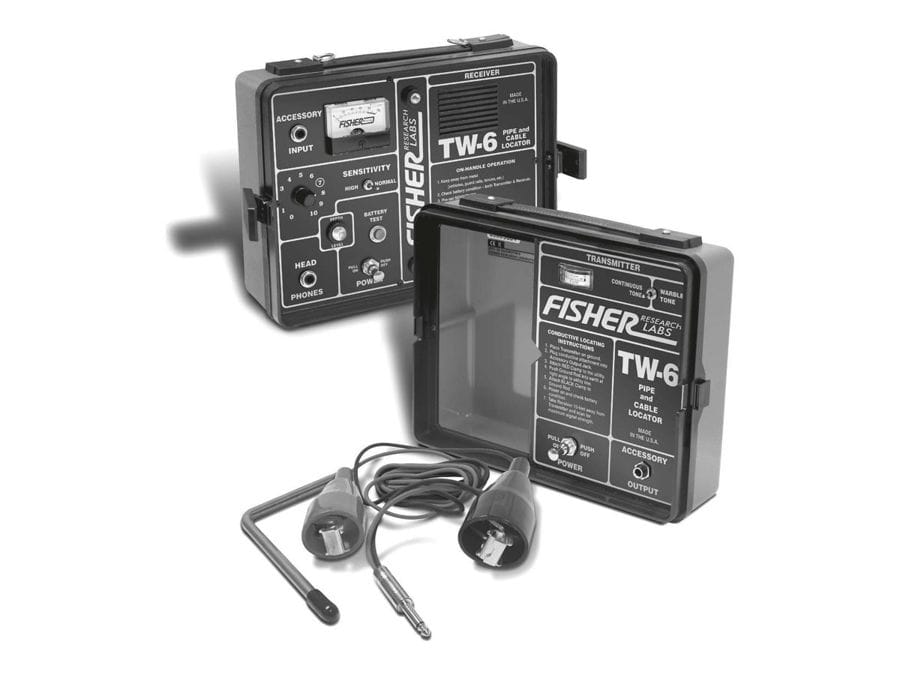
If your job is a buried or paved-over curb box rather than a pipe, the Fisher M-66 valve and box locator is $532; Fisher calls it an all-metal detector that can even search through concrete and asphalt. More on the TW-6 is on our Fisher TW-6 split box locator page.
Our TW-6 vs VM-810 comparison shows what the extra $2,759 for the Vivax-Metrotech VM-810 buys.
What locator should a small water district buy for ductile iron, tracer wire and copper services?
The Vivax-Metrotech VM-810, at $3,667. Vivax-Metrotech calls it an excellent instrument for tracing water and gas distribution lines, and its high-frequency 83 kHz signal can jump insulators and rubber gaskets often found in water and gas distribution systems.
- Tracer wire and copper services: clip the transmitter's red lead to a clean metal part of the line (hydrant, meter, riser, valve or tracer wire), walk the black lead out at a right angle to the ground stake, and start on low power to limit bleed-over.
- Soil and pipe: its automatic impedance matching compensates for differences in soil conditions, conductor size and material.
- Lines you can't reach: in inductive mode the transmitter puts its signal on conductors 8–10 ft either side of it, with nothing clipped on. Vivax-Metrotech notes induction may be hard when the target is 3 ft or deeper or sits in new backfill.
- Reading it: one button on the receiver gives depth and signal current, and depth is within 5% of actual depth when the signal is not distorted, less accurate when it is.
- Plastic: the VM-810 finds metallic conductors only. Plastic pipe needs a sonde in the pipe and the receiver's Sonde mode.
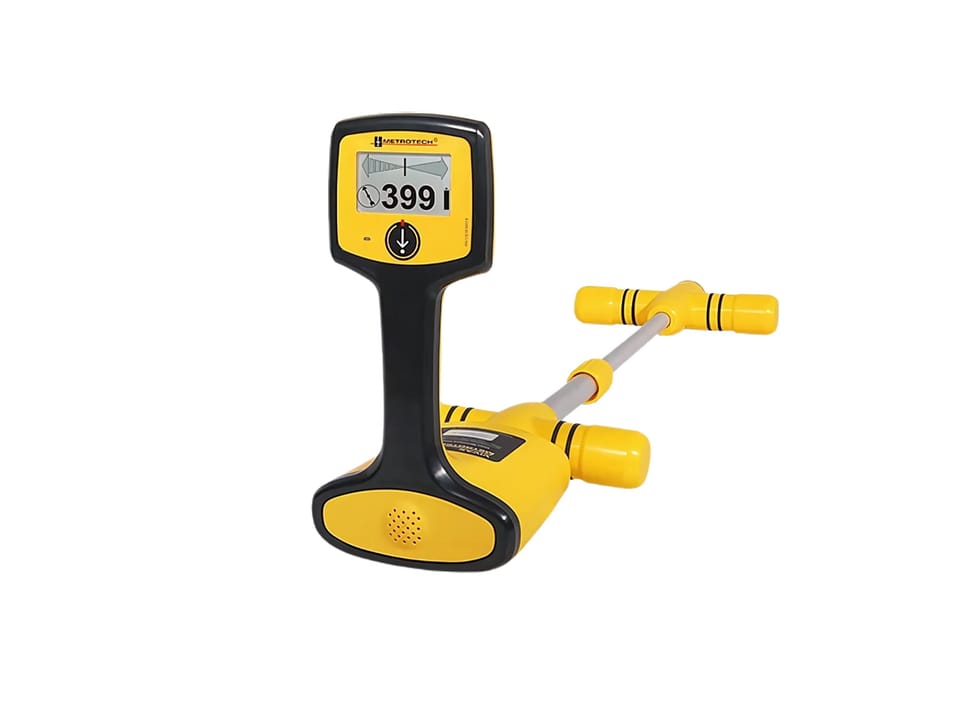
The handbook describes the VM-810 as a transmitter plus a receiver; ask us what's in the kit when we quote it. For more on each model for water work, see our water line locators.
Malone Detecting fits small water and gas systems because gas and public utilities are the customers we mainly serve, and we do both the sale and the service.
What should an excavation contractor buy to trace private water, sewer and power lines?
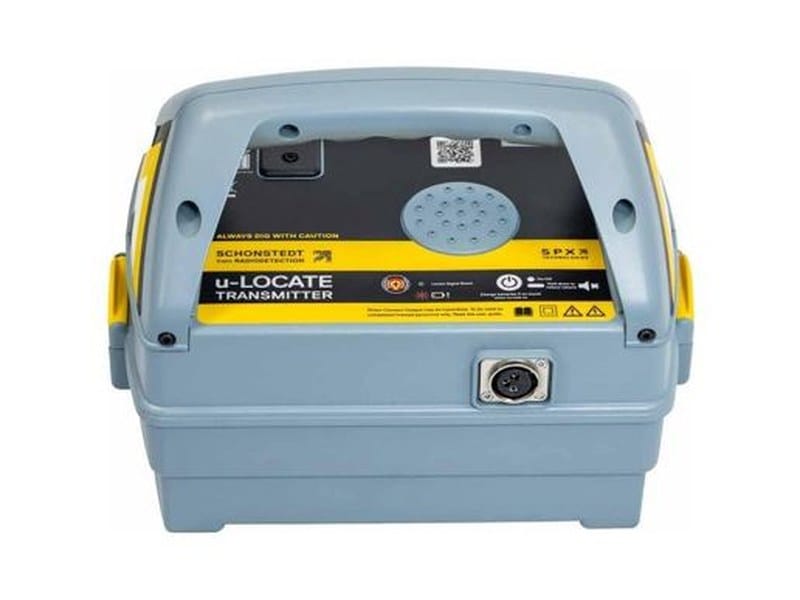
The Schonstedt u-Locate+ receiver with the u-Locate transmitter, $2,552 for the pair. The pair covers each of those lines:
- Metal water lines: direct connect, clamp or induction at 82 kHz, or direct connect at 33 kHz.
- Plastic sewer and drain lines: the u-Locate+ finds a 512 Hz sonde pushed down the pipe, or an inspection camera that transmits at 512 Hz; the manual gives its sonde-mode maximum depth as 5 to 15 ft.
- Live power: passive mode picks up a live cable's 50/60 Hz signal with the receiver alone.
The receiver reads depth to 19 ft, its arrows point you onto the line, and it's rated IP65. If you don't need sonde mode, the standard u-Locate is $2,260 for the receiver and transmitter.
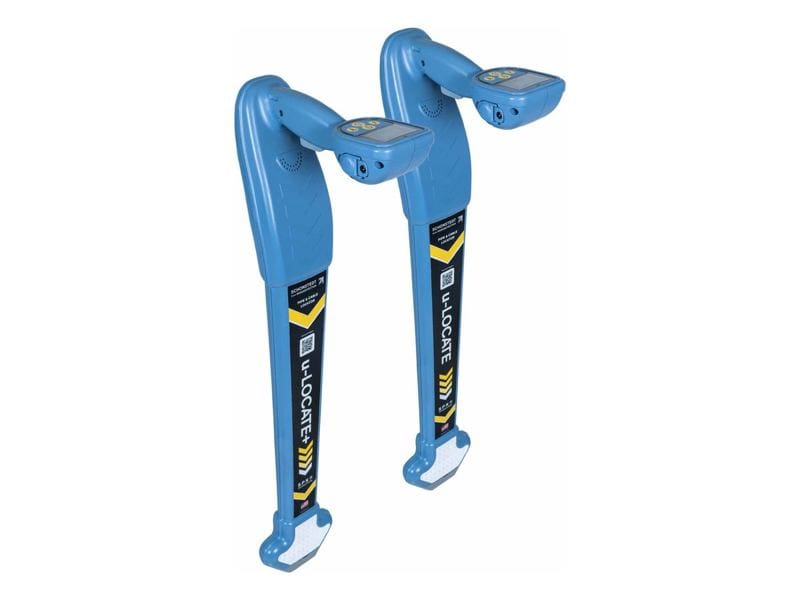
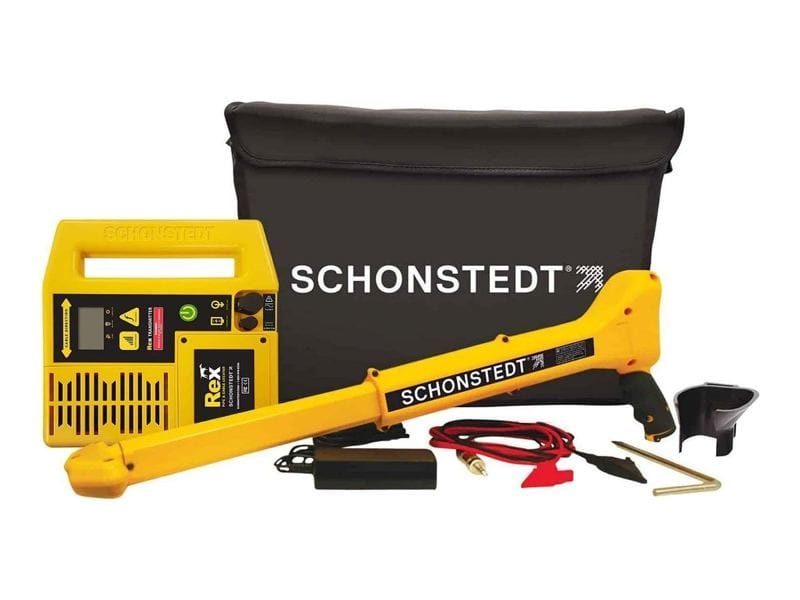
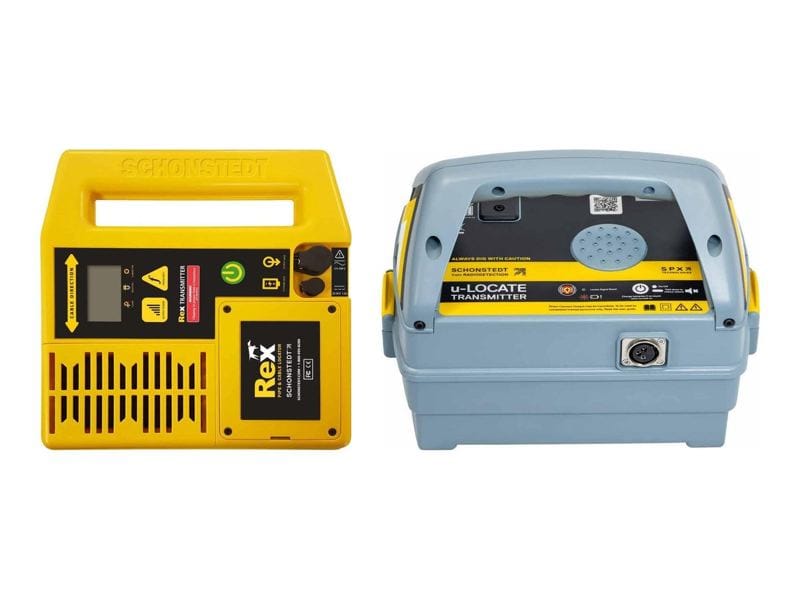
Step up to the Schonstedt Rex pipe and cable locator, $4,040 for the receiver and transmitter, if you want all 3 active frequencies (512 Hz, 33 kHz and 82 kHz) on one set, a 3-year warranty (the u-Locate's is 1 year, extendable to 3), and a transmitter that checks the line for AC and DC voltage in conductive mode and warns above 5 V. The Rex reads depth to about 19 ft and finds 512 Hz sondes to about 5–15 ft.
What locator does an electrical contractor need?
A receiver with a passive power mode plus a transmitter: the Schonstedt u-Locate pipe and cable locator with its transmitter, $2,260 for the pair. Set to 60 Hz, the receiver finds a live cable that's carrying current on its own. Schonstedt warns that some power cables do not radiate detectable power signals, and it recommends using the u-Locate transmitter whenever searching for pipes and cables. The u-Locate transmitter puts the signal on by direct connect, clamp or induction, at 33 kHz or 82 kHz.
Schonstedt's manual says connection to live power cables should only be undertaken by qualified personnel. Our guide to how to locate underground electrical wires goes through the passive sweep, the clamp and finding a break step by step.
What locator does a fence contractor need?
Both kinds, for different jobs. A magnetic locator finds the survey pins you set the fence line from, and a pipe and cable locator checks a spot for buried lines before you set a fence post.
- Pins: the Schonstedt GA-52Cx, $1,236, finds iron and steel and ignores aluminum, brass and copper. Schonstedt's brochure gives it 9 ft on a survey marker. The Schonstedt Spot, $1,110, is a lighter push-button version. Compare them on our magnetic locators page.
- Private lines: lines the property owner owns are private lines. OHIO811 lists electric lines run from the house to a shed, lamppost, landscaping lights or pavilion among them, and says a private locating company may be required to identify them. A u-Locate receiver in passive mode sweeps a post-hole spot for live power; metal water lines need its transmitter.
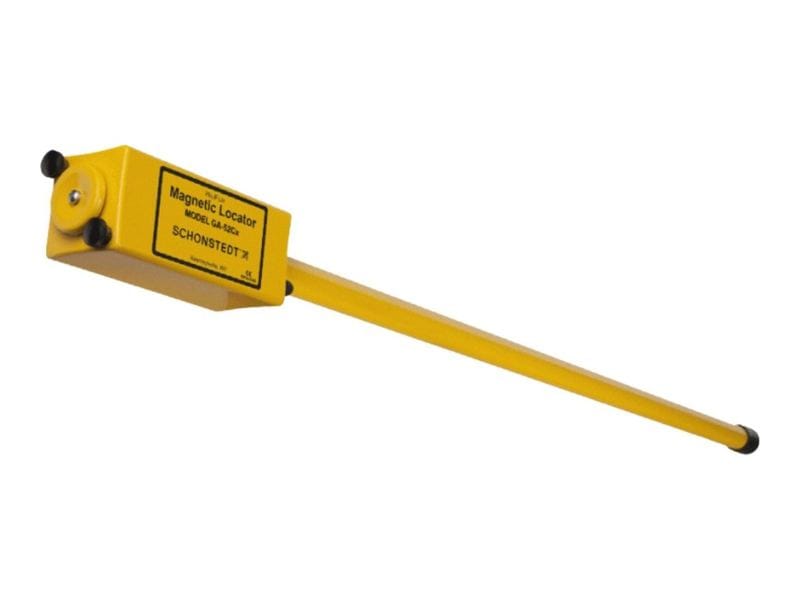
For pins next to a chain-link fence, on a loud roadside or in a crowded truck, our guide to the best magnetic locators compares the five we sell.
Which locator suits a crew that locates every day?
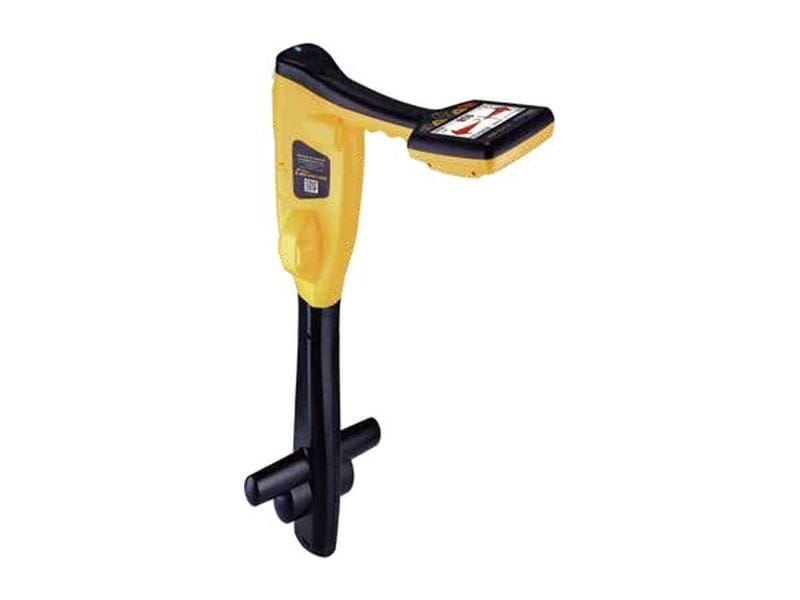
The Vivax-Metrotech vLoc3-9800, at $4,770. It's a walk-over receiver with:
- A wide choice of frequencies, configurable from 98 Hz up, and a scan that ranks your chosen frequencies by interference on a 0–140 dB scale before you start.
- Depth and signal current together, and current can display continuously. Watching the current against its trend shows where a line divides and when you've strayed onto an adjacent line.
- Data logging: 50 million records, each with depth, current, frequency and, with Bluetooth active, a GPS coordinate, date and time.
- Passive power and radio modes, sonde mode, and an IP65 rating.
It works with a Loc3 5-watt or 10-watt transmitter; ask us what your quote includes. The Vivax-Metrotech vLoc3-Pro, $5,500, is a receiver with a choice of locate screens, including Vector and Plan View, and takes an A-frame accessory for finding ground faults.
Vivax-Metrotech says its equipment is for trained operators only, not for general household or consumer use.
How much does a utility locator cost?
A pipe and cable locator costs from $908 for the Fisher TW-6 set to $5,500 for the Vivax-Metrotech vLoc3-Pro receiver at Malone, and a magnetic locator from $1,071 to $1,348. Our locator price list has every model we sell, with the maker's list price beside ours.
A higher price buys features, not always more depth: the $2,260 u-Locate set and the $4,040 Rex set both read depth to about 19 ft. You'll find every set on our underground pipe locators page and the transmitters on our locator transmitters page.
Can a pipe and cable locator find plastic pipe?
Not on its own. Vivax-Metrotech says the VM-810 finds metallic conductors only, and the Schonstedt and Fisher manuals find plastic pipe through something pushed down it. To find a plastic line you add something the locator can follow:
- Tracer wire, if it was laid with the pipe: connect the transmitter to it like a metal line.
- A sonde pushed down the pipe, found in sonde mode: the u-Locate+, the Rex, the VM-810 and the vLoc3 receivers have it. The standard u-Locate doesn't.
- A fish tape or snake down the pipe with the transmitter on it, Fisher's way with the TW-6.

If you're tracing a plastic water service, our water line guide covers how to find PVC pipe underground step by step.
Should I buy a locator or hire a private locator?
OHIO811 says a private locating company may be required to identify private lines; the other way is your own crew with a locator. It also says service lines are typically considered the responsibility of the property owner and may require a private utility locator to identify these lines. We go through who marks what under does 811 locate all lines? in our gas line guide.

Owning a locator also means training someone to use it. Vivax-Metrotech's equipment is for trained operators only, and Schonstedt recommends a daily functional test on the u-Locate receiver and transmitter before use.
Is a used locator from eBay worth it?
Check the warranty first. Schonstedt's warranty runs from shipment to the original purchaser: 3 years on the Rex, 1 year on the u-Locate with an option to extend to 3 years. A used unit's warranty, if any is left, was counted from someone else's purchase. We sell new units, and Joe Malone services the Schonstedt locators we sell. He tests units, replaces coils, latches, covers and switches, and tests the sensors and controls.
Can I rent a utility locator?
Yes, rental stores list them by the day and week; our guide rent or buy a pipe locator? puts their rates beside what a set costs to buy.
What to check before you buy a utility locator
Match these against your work before you call for a quote:
- Frequencies for your lines. 512 Hz if you'll find sondes, 83 kHz on the VM-810 for water and gas lines with insulators and rubber gaskets, and enough choices to dodge interference (the vLoc3-9800 ranks them for you).
- A depth readout. The u-Locate, Rex, VM-810 and vLoc3 receivers read depth at a button press; the TW-6 works it out by hand.
- A passive power mode if you find live cables: the u-Locate, Rex and vLoc3 receivers have it.
- Sonde mode if you trace plastic sewer or drain lines.
- A current readout if you need to tell lines apart: the VM-810 and vLoc3 receivers show it.
- What's in the box. We sell the u-Locate and Rex receivers and transmitters separately, and for the u-Locate, clamps, sondes and headphones are extra-cost accessories.
- The warranty and who repairs it.
| TW-6 | u-Locate | Rex | VM-810 | vLoc3-9800 | |
|---|---|---|---|---|---|
| Active frequencies | 81.92 kHz | 82 kHz (u-Locate+ adds 33 kHz) | 512 Hz, 33 kHz, 82 kHz | 83 kHz | Wide choice, from 98 Hz |
| Depth reading | By hand (45° method) | Yes, to 19 ft | Yes, to about 19 ft | Yes | Yes |
| Passive power mode | Not listed | Yes | Yes | Not listed | Yes |
| Sonde mode | Not listed | u-Locate+ only | Yes | Yes | Yes |
| Current reading | Not listed | Not listed | Not listed | Yes | Yes |
| Warranty | Not stated in the manual | 1 year, extendable to 3 | 3 years | Not stated in the manual | Not stated in the manual |
| Price at Malone | $908 | $2,260 with transmitter | $4,040 with transmitter | $3,667 | $4,770 |

Not sure which fits your crew? Call us on 937-600-8155 with the lines you trace and we'll quote the set that does the job.